
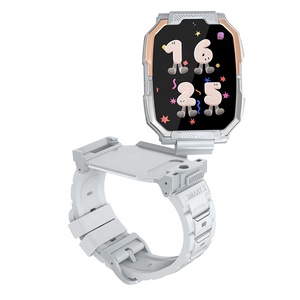
Explore our CE-certified line of smartwatches engineered for young demographics, seniors, and specialized security tracking. Built in compliance with EU RED, EN 62368-1, and RoHS directives.
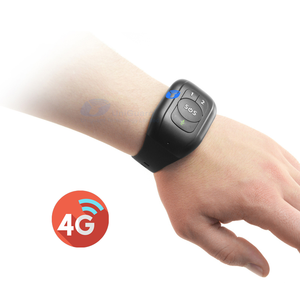
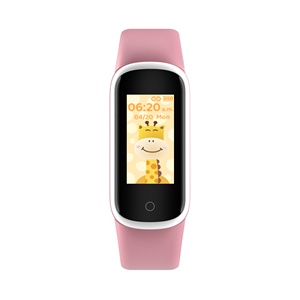
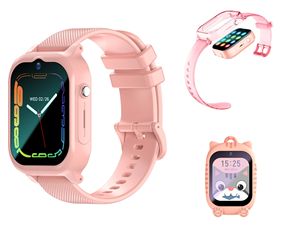
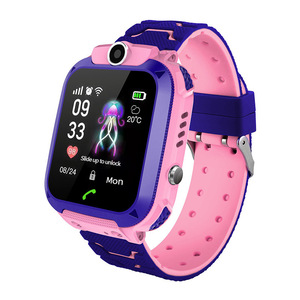
The global market for smart wearables dedicated to children—specifically girls aged 4 to 12—has transitioned from basic pedometer novelties into sophisticated, safety-critical cellular devices. International buyers, telecom importers, and brand owners seeking custom OEM/ODM solutions face a strict regulatory landscape. Obtaining a genuine CE Certificate (Conformité Européenne) is not merely a formality; it requires stringent adherence to Radio Equipment Directive (RED) 2014/53/EU, Specific Absorption Rate (SAR) human exposure standards, EN 62368-1 electrical safety, and REACH/RoHS toxicological compliance for skin-contact materials.
As a leading manufacturing infrastructure partner with close to a decade of expertise (having delivered over 2 million devices worldwide), our manufacturing operations integrate modern hardware engineering with rigorous software ecosystem control. Our enterprise model empowers global brands to bridge the gap between child safety and healthy digital autonomy.
Manufacturing wearables for children requires significantly higher safety thresholds than adult consumer electronics. Below are the primary engineering pillars maintained across our production lines.
Children have thinner cranial bones and developing tissues. Our RF tuning guarantees head and body Specific Absorption Rate (SAR) metrics strictly below the 2.0 W/kg EU limit (typically tuned to ≤ 1.2 W/kg under maximum 4G power transmit states).
Girls' smartwatches feature soft-touch liquid silicone or TPU wristbands tested for ISO 10993 cytotoxicity and skin irritation. Straps are free from heavy metals, phthalates, and nickel release per REACH Annex XVII regulations.
Equipped with high-density pure cobalt Lithium-ion polymer batteries featuring dual MOS protection ICs. Thermal run-away protections prevent overheating during rapid charging or high cellular processing loads.

Our manufacturing ecosystem handles the entire development continuum—from initial ID design and tooling mold development to SMT board placement, firmware optimization, and white-label cloud application backend integration.
Whether you require vibrant, ergonomic designs specifically targeted for girls, unique UI theme development, or proprietary geofencing algorithms, our R&D team provides full turnkey support.
Sourcing executives must align their product roadmaps with emerging consumer demands, hardware miniaturization, and tightening global privacy regulations.
Transitioning from physical nano-SIM trays to embedded eSIMs enhances IP68 water resistance while lowering RMA rates caused by damaged card slots. Multi-band LTE-M and NB-IoT support ensure seamless international roaming.
Demand is shifting toward low-power AMOLED and reflective memory-in-pixel (MIP) screens. High contrast displays provide clarity under direct sunlight while prolonging battery life to 3–5 days of active GPS tracking.
Parents prioritize "dumb-smart" technology. The market rejects open internet access, app stores, and social feeds in favor of closed ecosystem communication (whitelist-only voice/video calling and encrypted chat).
Incorporating pedometer goals, reward platforms, and active play challenges keeps young users engaged without screen addiction, encouraging healthy daily lifestyle habits.
How modern factory engineering is solving historical pain points in kids' smart wearable manufacturing.

Legacy trackers relied solely on LBS cell towers, leading to position drifts of several kilometers. Next-gen R&D merges GPS + Wi-Fi RSSI positioning + LBS + AGPS to deliver indoor positioning accuracy down to 5–15 meters.
Hardware key architecture now incorporates dedicated physical SOS switches. Pressing and holding the emergency button triggers an instant 30-second ambient voice recording, sends emergency push notifications to designated app administrators, and cycles through speed-dial contacts automatically.
Firmware support for scheduled quiet hours ("School Mode") locks all gaming or camera functions during class hours while maintaining background SOS and real-time location pinging active.
We provide global brands, regional telecom operators, and retail chains with an end-to-end manufacturing framework built on reliability, transparency, and accountability.
We maintain complete technical construction files (TCF) and assist international partners with CE RED, FCC ID, Telec, and NCC test reports through accredited labs (SGS, TÜV, Intertek).
Equipped with automated optical inspection (AOI), SMT assembly, ultrasonic waterproof sealing machines, and drop/vibration testing rigs. Every batch undergoes 100% functional aging tests.
Our software stack operates on secure AWS/Azure servers based in Frankfurt and North America. Encryption standards ensure strict adherence to GDPR and COPPA child privacy mandates.
Detailed answers covering manufacturing MOQs, certification processes, software integration, and post-sales support.
To legally market smartwatches in the EU, devices must possess a valid CE Declaration of Conformity covering the Radio Equipment Directive (RED) 2014/53/EU. Key sub-standards include: EN 301 489 (EMC), EN 301 908 / EN 300 328 (Cellular & Wi-Fi radio performance), EN 62368-1 (Electrical Safety), and EN 50566 / EN 62209-2 (SAR RF exposure). Additionally, RoHS Directive 2011/65/EU and REACH compliance are mandatory for skin-contact silicone components.
For standard factory-neutral stock packaging, MOQs start as low as 100 to 500 units. For customized OEM packaging, silk-screened brand logos, and custom color matching (e.g., custom pantone pinks or violet cases for girls' watches), the standard MOQ is 1,000 units. Deep ODM customization involving custom tooling molds or bespoke PCB layout modifications requires an MOQ of 5,000+ units.
Yes. We provide complete white-label mobile applications for iOS and Android. Our software team will brand the application UI, app store listings, server URLs, push notification servers, and logo assets according to your brand identity guidelines. SDKs and APIs are also available if you choose to integrate device data into an existing proprietary app ecosystem.
All lithium polymer batteries incorporated into our smartwatches undergo UN38.3 testing, MSDS certification, and Air/Sea Transport Safety Reporting. Packages are built with anti-static, shock-absorbing materials compliant with IATA Dangerous Goods Regulations, featuring built-in cell protection circuits against overcharging, deep discharge, and short circuits.
Our 4G cellular smartwatches utilize global-band module configurations (such as UNISOC or ASR platform chipsets). European versions cover B1/B3/B7/B8/B20, while North American configurations support B2/B4/B5/B12/B17/B66/B71. We configure firmware band locks according to your destination market to optimize carrier handshakes (including VoLTE voice support).