Engineered for global telecom compatibility, strict SAR safety standards, and robust child-proof durability. Select a model below to request customized OEM specifications, sample units, or private-label firmware builds.
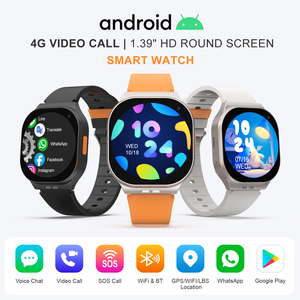
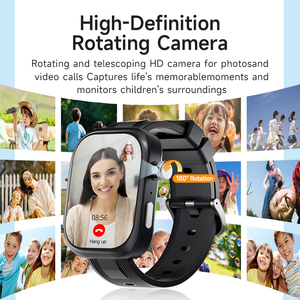
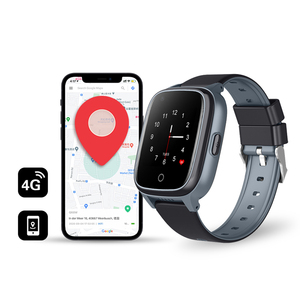
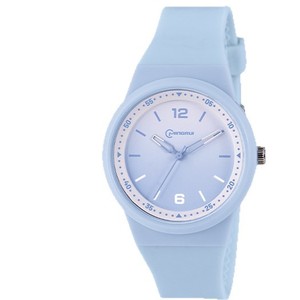
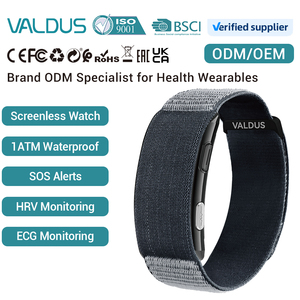
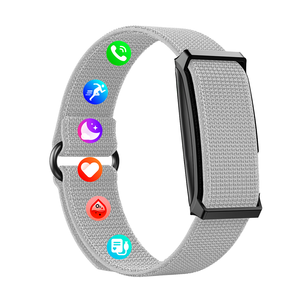
An exhaustive technical sourcing guide for global telecom operators, consumer electronics brands, and institutional procurement officers seeking reliable OEM/ODM partners in Shenzhen, Dongguan, and Huizhou smart wearable clusters.
The global market for children's wearables has undergone a fundamental architectural shift. Where early iterations relied on tethered Bluetooth connections or legacy 2G/3G networks—which carriers worldwide have now decommissioned—modern parental demand centers exclusively on standalone 4G LTE Cat-1 and Cat-4 cellular connectivity. Parents seek a "first phone alternative": a device that facilitates instant two-way VoLTE voice calling, real-time HD video communication, precise multi-modal geographic positioning, and remote emergency SOS activation without exposing young children to open web browsers, algorithmic social media feeds, or screen addiction risks.
China's Greater Bay Area (specifically the tech corridors of Shenzhen Hi-Tech Industrial Park and Dongguan manufacturing hubs) represents the undisputed global epicenter of LTE kids smartwatch production. Over 85% of the world's cellular-enabled children's smartwatches are designed, engineered, and assembled within this micro-ecosystem. For international procurement teams, partnering directly with verified OEM/ODM factories provides unmatched economies of scale, access to cutting-edge chipset platforms (such as Unisoc and Qualcomm), and turnkey software engineering solutions.
True information gain requires understanding what lies beneath the silicone strap: PCBA layout, antenna design, power distribution, and multi-constellation geolocation accuracy.
Premier factories deploy cost-efficient, highly integrated cellular platforms such as the Unisoc 8521E or W307 and Qualcomm Snapdragon Wear series. These SoCs integrate ARM Cortex processors with low-power LTE basebands capable of supporting global spectrum bands (B1/B3/B5/B7/B8/B20/B38/B39/B40/B41 for EU/Asia and B2/B4/B5/B12/B17/B66/B71 for North America).
Achieving sub-5-meter positioning accuracy requires a fused algorithmic positioning engine: GPS (L1/L5 dual-band) + GLONASS + Beidou + Wi-Fi SSID Sniffing + LBS Cellular Triangulation. Advanced AGPS algorithms pre-fetch satellite ephemeris data, reducing Time-To-First-Fix (TTFF) to under 3 seconds upon exiting buildings.
Kids watches face rigid thermal and spatial constraints. Leading China manufacturers use custom-shaped High-Density Pure Cobalt Lithium Polymer batteries (680mAh to 900mAh) coupled with dedicated Power Management ICs (PMIC). Intelligent sleep modes throttle background LTE polling during school hours to guarantee 48–72 hours of standby time.
Kids subject wearables to extreme environments. Manufacturing standards require IP67 or IP68 water immersion testing (1.5 meters for 30 minutes). Structural integrity involves double-injection molded TPU/silicone, liquid silicone rubber (LSR) gasket seals around SIM card trays, and hydrophobic acoustic membranes across speakers and microphones.
To maintain competitive advantage in consumer markets, B2B procurement managers must align their product roadmaps with emerging hardware and software paradigms driving the Next-Gen Smartwear Industry.
| Technology Vector | Legacy/Standard Specs (2021-2024) | Next-Gen Sourcing Benchmark (2026-2030) | Commercial Advantage for Importers |
|---|---|---|---|
| Cellular Standard | LTE Cat-4 (High energy consumption) | LTE Cat-1 bis / eDRX Low-Power | Reduces BOM costs by 15%, extends battery life by 40% |
| SIM Architecture | Physical Nano-SIM Slot with rubber tray | Integrated eSIM / iSIM Technology | Enables IP69K sealing, reduces physical assembly failure rates |
| Biometrics & Health | Basic Pedometer / Step Tracking | Optical SpO2 + Temp + ECG Bio-Sensors | Opens healthcare, insurance, and medical B2B distribution channels |
| Parental Ecosystem | Third-party generic backend apps | GDPR/COPPA Compliant Private Cloud API | Ensures full compliance with strict Western data privacy legislation |
| Screen & Optics | TFT LCD (240x240) / VGA Cameras | AMOLED High-Contrast / Dual HD Cameras | Delivers premium consumer appeal and higher retail profit margins |
While early 4G watches utilized LTE Cat-4 modules designed for smartphone-level data throughput, the industry has rapidly pivoted toward LTE Cat-1 bis. Single-antenna Cat-1 bis chips drastically reduce RF complexity, diminish board space requirements, lower silicon costs, and optimize power draw during VoLTE calls. B2B buyers should prioritize factories offering Cat-1 bis platforms for high-volume promotional or carrier-bundled products.
Hardware quality is only half the equation. Regulatory authorities in Europe (GDPR) and North America (COPPA) impose severe penalties on unauthorized transmission of children's location data. Top-tier Chinese ODM factories now offer end-to-end white-label cloud ecosystems hosted on localized AWS/Azure servers with AES-256 data encryption, mutual TLS authentication between watch and server, and clean audit trails.
From industrial design (ID) rendering to Surface Mount Technology (SMT) and final packaging, our verified supply chain partners deliver institutional-grade execution.
Premier manufacturing plants house high-speed Yamaha and Siemens SMT production lines operating in Class 100,000 dust-free cleanrooms. Automated Optical Inspection (AOI) and X-ray solder joint verification ensure flawless placement of 0201 micro-components on multi-layer high-density PCBAs.
To guarantee seamless carrier connectivity on global networks, factories utilize in-house RF testing chambers (CMW500 / Agilent systems). Every production batch undergoes Over-The-Air (OTA) Total Radiated Power (TRP) and Total Isotropic Sensitivity (TIS) calibration across target cellular bands.
Finished smartwatches are subjected to stress protocols: 1.2-meter drop tests onto hardwood, button life cycle testing (100,000+ presses), thermal shock (-20°C to +60°C cycling), salt spray corrosion chambers for metal charging contacts, and pneumatic pressure leak tests.
Whether you require custom tooling for a unique watch casing, private-label box designs, custom bootloader animations, pre-installed regional APNs, or branded iOS/Android parental control apps, Chinese factories provide comprehensive full-stack engineering support.
Connect directly with our engineering and B2B export department. Get factory-direct pricing, request physical evaluation samples, and inspect our ISO9001/BSCI audit documentation.
Inquire NowClear, transparent answers regarding compliance, custom firmware development, logistics, and minimum order quantities (MOQ).
For standard inventory with customized silk-screen logo printing and custom packaging, MOQs generally start at 500 to 1,000 units. For complete ODM projects involving custom plastic injection tooling, specialized PCBA layout changes, or custom CMF colors, the baseline MOQ is typically 3,000 to 5,000 units depending on the chipset platform selected.
Tier-1 factories design PCBA shielding and antenna systems specifically to satisfy Specific Absorption Rate (SAR) regulatory caps (< 1.6 W/kg for FCC in North America, < 2.0 W/kg for CE in Europe). Products undergo testing at accredited third-party laboratories (SGS, TUV, Intertek) to secure CE-RED, FCC ID, RoHS, REACH, and UN38.3 battery transport certifications before export.
Yes. OEM/ODM agreements typically include white-label options for parental control mobile applications. Software engineering teams can rebrand app icons, splash screens, color schemes, and UI layouts, as well as configure private cloud backend servers to align with your brand's data governance standards.
European and Asian networks predominantly utilize FDD-LTE Bands 1, 3, 7, 8, 20 and TDD-LTE Bands 38, 40. North American carrier networks (AT&T, T-Mobile, Verizon) require specialized regional modules supporting LTE Bands 2, 4, 5, 12, 13, 17, 66, and 71, along with PTCRB certification for network attach approval.
Upon final approval of golden samples and customized artwork specifications, SMT component procurement and PCBA processing take approximately 15 to 20 days. Final assembly, waterproof testing, aging tests, and packaging require an additional 10 to 15 days, resulting in a total mass production cycle of 25 to 35 calendar days.
Standard factory terms include a 12-month quality warranty on hardware PCBA and displays. Most B2B agreements include a 1% spare parts package (casing, straps, batteries, screens) shipped with main production runs, or credit notes issued against future orders for verified factory-defect RMA units.
Accelerate your product launch with proven hardware platforms, certified global frequency support, and full-stack software development. Contact our B2B export desk for instant catalog downloads and volume quotation sheets.