
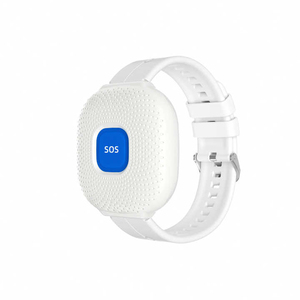
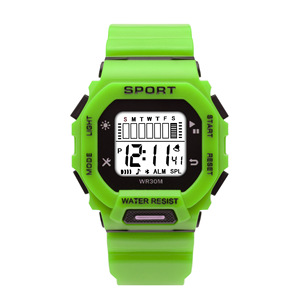
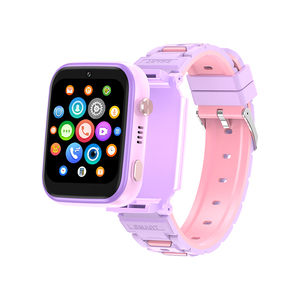
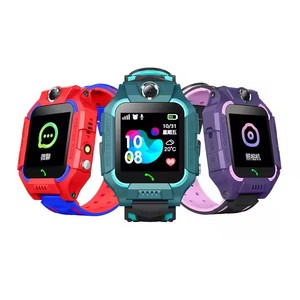
1. Strategic Overview: The Evolution of Student Wearables Sourcing in China
The global educational wearable market has undergone a fundamental architectural shift. No longer categorized merely as novelty consumer gadgets, student smartwatches now function as essential personal safety endpoints, micro-communication portals, and campus management tools. Driven by heightened parental security concerns, legislative bans on smartphones inside elementary and secondary classrooms, and the maturation of cellular IoT infrastructure, international B2B buyers—ranging from specialized consumer electronics distributors to telecom operators and school system suppliers—are actively restructuring their OEM/ODM procurement strategies.
As the primary manufacturing powerhouse responsible for over 85% of world smart wearable output, China’s manufacturing ecosystem in Shenzhen and Dongguan offers unparalleled supply chain density. However, navigating China wholesale student smartwatch factories requires an acute understanding of chip platform choices, firmware customization capabilities, regulatory compliance frameworks (such as FCC SAR, CE RED, and local privacy standards), and component quality assurance. This whitepaper provides procurement directors, brand owners, and OEM sourcing executives with the authoritative insights necessary to maximize information gain, mitigate supply chain risk, and capture market share in 2025 and beyond.
Key Strategic Takeaway for B2B Importers: Successful sourcing extends far beyond initial FOB unit cost. True procurement optimization balances RF band compatibility across target export markets, battery chemistry safety, customizable Mobile Device Management (MDM) software interfaces, and long-term OTA firmware maintenance capabilities.
2. Technological Trends Defining Next-Generation Student Smartwatches
To establish a commanding brand presence, OEM brands must align their product roadmaps with key technological shifts. Modern student smartwatches are complex embedded systems requiring low power consumption, resilient cellular performance, and tamper-proof security architectures.
Migration away from legacy 2G/3G networks toward high-efficiency 4G LTE Cat-1 chipsets (e.g., UNISOC 8910DM) and integrated eSIM technology for seamless global carrier activation.
Combining GPS, AGPS, LBS, Wi-Fi location sniffing, and Bluetooth beacon triangulation to ensure pinpoint accuracy (<5 meters) even inside reinforced concrete school buildings.
Parent-controlled or automated geofenced locks that disable games and non-essential apps during school hours, preserving basic SOS emergency calling functionality.
Double-injection silicone molds, sonic welding, and hydrophobic membrane seals designed to withstand daily schoolyard wear, dust immersion, and liquid submersion.
Integration of PPG heart-rate modules, body temperature sensors, step counters, and automated fall detection algorithms tailored specifically for young demographics.
Open API access enabling brands to white-label existing iOS/Android parental apps or integrate smartwatch data directly into unified smart school eco-systems.
3. Global Sourcing Dynamics: OEM vs. ODM Strategy Selection
When procuring student smartwatches from China exporters, buyers must evaluate whether an OEM (Original Equipment Manufacturing) or ODM (Original Design Manufacturing) contract model aligns best with their go-to-market timeline and engineering capabilities.
| Evaluation Metric | ODM Sourcing (Off-the-Shelf / Customized) | Full Custom OEM Sourcing |
|---|---|---|
| Target Buyer Profile | Regional Importers, E-commerce Brands, Retailers | Telecom Operators, National Brands, School Systems |
| Tooling & NRE Costs | Zero to Minimal (Logo printing, UI theme changes) | High ($15,000 – $60,000 for plastic/silicone molds) |
| Lead Time to Mass Production | 2 to 4 Weeks | 12 to 24 Weeks (Includes ID design, tooling, certification) |
| Firmware & OS Depth | Pre-existing RTOS or Android with customizable skin | Full custom Linux/Android SDK, deep API hooks |
| Minimum Order Quantity (MOQ) | 500 – 1,000 Units per colorway | 5,000 – 10,000 Units |
4. Engineering & Production Excellence in Leading Chinese Smartwatch Factories
Tier-1 student smartwatch factories in China distinguish themselves through systematic quality control and sophisticated automated manufacturing processes. A standard high-volume smartwatch production line incorporates the following critical manufacturing stages:
A. SMT (Surface Mount Technology) Electronics Assembly
The core motherboard PCB is populated inside ISO Class 7 cleanrooms using high-speed Yamaha or Fuji SMT placement machines. Automated Optical Inspection (AOI) inspects solder joints on BGAs and chipsets to eliminate short circuits, cold joints, or component misalignments before reflow soldering.
B. Antenna Tuning & RF Testing
Because cellular spectrum compliance varies globally (e.g., North American B2/B4/B12 versus European B1/B3/B7/B20), leading factories deploy Agilent and Rohde & Schwarz RF test stations within shielded anechoic chambers. Each watch board undergoes TRP (Total Radiated Power) and TIS (Total Isotropic Sensitivity) calibration to guarantee signal stability across multi-story school buildings.
C. Environmental & Durability Stress Testing
Before batch release, sample lots undergo rigorous environmental validation: thermal shock testing (-20°C to +60°C), micro-drop testing (1,000 cycles from 0.5m), button actuation lifespan testing (100,000 presses), salt-spray corrosion testing for magnetic charging pins, and 100% pneumatic IP68 air-pressure leak tests.
5. Enterprise Advantages of Partnering with Established Export Manufacturers
Choosing an experienced, export-focused factory partner grants brand owners significant strategic leverage in competitive market environments:
- Comprehensive Certification Portfolios: Direct access to pre-certified designs with CE, FCC, RoHS, REACH, and SAR test reports, reducing time-to-market and regulatory compliance costs.
- Localization & Firmware Adaptability: In-house software engineering teams capable of integrating 30+ language packs, local maps (Google Maps, Mapbox), and region-specific push notification infrastructures.
- Battery Safety Compliance: Pure cobalt lithium polymer battery cells equipped with Seiko hardware protection ICs, certified under UN38.3, MSDS, and IEC 62133 safety mandates.
- End-to-End Supply Chain Traceability: Direct component sourcing partnerships with tier-1 semiconductor foundries ensuring stable component availability and predictable pricing guarantees.