Engineered for global telecom compliance, featuring standalone cellular connectivity, real-time GNSS positioning, and certified hardware durability.
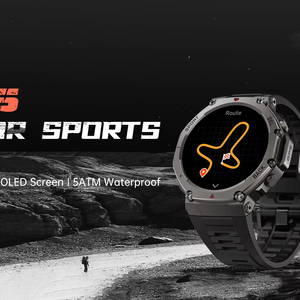
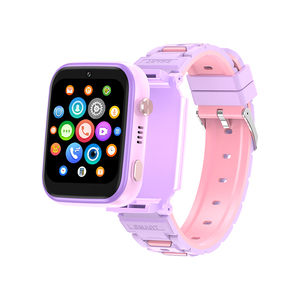
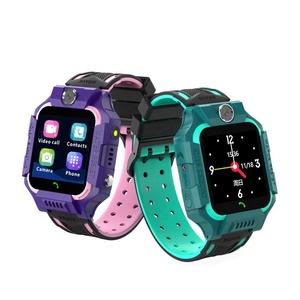
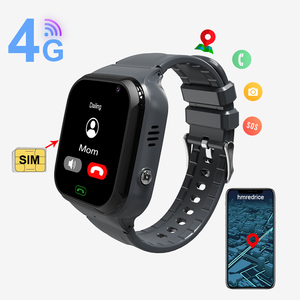
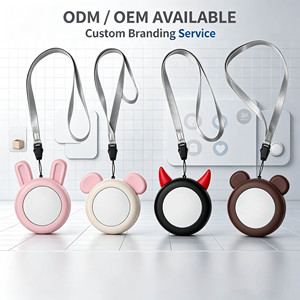
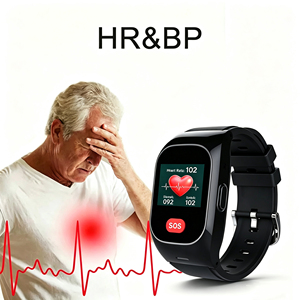
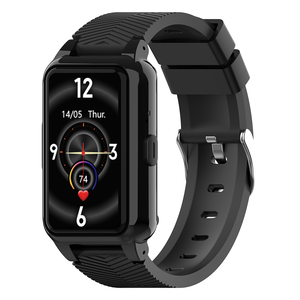
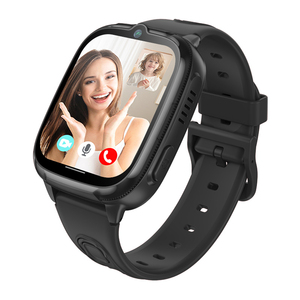
The global wearable technology ecosystem has evolved rapidly from simple step-tracking accessories into sophisticated, standalone cellular devices. Modern mobile phone watches—often categorized as smart phone wristwatches or cellular wrist communicators—integrate multi-band 4G LTE/5G RedCap modems, advanced multi-constellation GNSS (GPS, BDS, GLONASS, Galileo) positioning modules, biometrics, and hardened embedded operating systems. For enterprise buyers, telecom operators, brand licensors, and hardware distributors, navigating the manufacturer landscape requires an in-depth understanding of OEM (Original Equipment Manufacturing) and ODM (Original Design Manufacturing) capabilities.
Primary hardware assembly centers in Pearl River Delta regions—specifically Shenzhen, Dongguan, and Huizhou—account for over 80% of global smart mobile phone watch output. However, manufacturing expertise varies dramatically between tier-1 ODM factories with automated Surface Mount Technology (SMT) lines and tier-3 manual assembly workshops. This procurement whitepaper analyzes top-tier hardware manufacturers, technological shifts, critical manufacturing quality metrics, and supply chain strategies required to deploy compliant, high-reliability mobile phone watches to international markets.
Evaluating manufacturers requires examining automated assembly infrastructure, software integration capabilities (custom ROMs, MDM platforms, mobile guardian ecosystems), quality assurance certifications (ISO9001, ISO14001, BSCI), and telecom carrier lab approvals (AT&T, Vodafone, Deutsche Telekom, SoftBank).
Wonlex stands as a global leader in original design and production of standalone cellular safety watches. Operating automated SMT placement lines and Class 100,000 dust-free cleanrooms, Wonlex delivers end-to-end OEM software customizing options, proprietary app integrations, and strict SAR RF calibration.
Renowned for hardware reliability and GDPR-compliant cloud infrastructure, Xplora's manufacturing ecosystem focuses on custom chipset optimizations (Unisoc/MediaTek platforms), IP68 water-ingress sealing, and custom anti-pinch silicone materials, setting the international baseline for children's mobile phone watches.
Compal provides massive-scale EMS manufacturing for flagship global consumer brands. Their manufacturing facilities offer multi-axis robotic assembly, automated optical inspection (AOI), and full carrier-grade 3GPP conformance testing for high-tier Android mobile phone wristwatches.
Specializing in ultra-low-power health tracking and cellular connectivity, Huami operates specialized biometric calibration labs for PPG heart rate sensors, SpO2 pulse oximetry, and multi-band GPS antenna arrays integrated into lightweight polycarbonate and titanium alloy casings.
A pioneer in standalone locator watches, Abardeen/FiLip provides robust RF antenna engineering (FPC and LDS laser-direct structuring technology), customized RTOS/Android firmware builds, and rigorous drop/impact testing for high-durability school-age devices.
Safepoint focuses on medical-grade eldercare wearables featuring 3D accelerometer fall-detection algorithms, dedicated physical SOS speed-dial keys, 4G LTE VoLTE voice clarity optimization, and skin-temperature monitoring sub-assemblies.
Integrating embedded AI voice engine algorithms, Smart-Care manufactures next-generation learning and companionship devices featuring real-time audio compression, dual-camera video calling modules, and high-efficiency TFT display driver boards.
Desay leverages automotive-grade manufacturing rigor for consumer wearables. Their production features double-shot injection molding, automated silicone gasket insertion, and hydrostatic pressure testing tanks guaranteeing true 5ATM swimming waterproof ratings.
Thinkview excels at board-level integration, miniaturizing multi-chip packages (eMCP) combining flash memory and cellular modems into micro PCBA form factors, dramatically extending battery life for slim-profile phone wristwatches.
YQT maintains high-volume production lines for international retail brands, offering extensive tooling libraries, custom silk-screen options, bespoke packaging manufacturing, and multi-lingual firmware flashing capabilities.
The mobile phone watch industry is undergoing rapid architectural evolution, shifting from simple 2G/3G connectivity toward highly integrated, low-power cellular systems. Buyers must align their product roadmaps with key technological trends:
With legacy 2G/3G network sunsets complete across North America, Europe, and major Asian territories, tier-1 manufacturers have transitioned entirely to 4G LTE Cat-1 and 5G RedCap (Reduced Capability) silicon solutions. Platforms such as the Unisoc W307, MediaTek MT6739, and Qualcomm Snapdragon Wear provide optimized cellular bandwidth for VoLTE (Voice over LTE) and video streaming while reducing thermal dissipation and power consumption.
Single-mode GPS is insufficient for modern child and senior safety monitoring. Leading factories integrate multi-constellation GNSS receivers combined with real-time Wi-Fi MAC address scanning and LBS (Location Based Services) cellular triangulation. Indoor positioning algorithms utilize ambient Wi-Fi signal mapping to determine location within multi-story buildings where direct GPS satellite line-of-sight is unavailable.
Wrist-worn cellular devices operate in close proximity to human tissue, rendering battery thermal stability paramount. Modern production lines utilize high-energy-density Lithium Polymer (Li-Po) Gel batteries equipped with Seiko protection ICs, preventing over-charge, over-discharge, and short circuits. Advanced factories implement ultrasonic welding for battery enclosure encapsulation to prevent moisture ingress and mechanical puncture risks.
When contracting an OEM/ODM factory for mobile phone watch inventory, B2B procurement officers must evaluate emerging supply chain dynamics and compliance mandates:
Partnering with a fully certified wearable device factory provides clear competitive advantages across product lifecycles:
High-speed Yamaha and Fuji SMT lines ensure micro-component placement accuracy down to 0201 package sizes, backed by Automated Optical Inspection (AOI) for 100% solder joint reliability.
Pre-tested firmware configurations covering PTCRB, GCF, FCC, CE RED, and TELEC regulatory domains simplify carrier lab approvals across North America, Europe, and APAC.
Full-stack white-label smartphone apps (iOS & Android) featuring live mapping, geofencing safe zones, remote audio monitoring, and school class-mode scheduling.
Direct technical answers addressing the key commercial and engineering inquiries faced by hardware sourcing managers.
For existing factory-standard ODM housing models with custom logo silk-screening and localized packaging, MOQs typically start at 1,000 units. For deep structural modifications (custom injection mold colors, unique wristband tooling, customized PCBA layout, or bespoke Android/RTOS firmware ROM builds), factory MOQs generally range from 3,000 to 5,000 units per production run.
Reliable manufacturers employ a two-step testing protocol: First, 100% of assembled watch casings undergo dry pneumatic pressure decay testing to verify seal integrity before installing delicate electronics. Second, statistical samples are subjected to wet hydrostatic immersion testing tanks (1.5 meters for 30 minutes for IP68; 1.0 meter for 30 minutes for IP67) to confirm structural gasket performance under real-world pressure conditions.
Battery performance depends heavily on GNSS reporting intervals and display usage. Under normal usage conditions (4G standby enabled, hourly GPS location upload, 10–15 minutes of daily VoLTE voice calls), a typical 600mAh to 900mAh Lithium Polymer battery delivers 24 to 48 hours of operational life. Power-saving modes with reduced ping frequencies can extend standby duration up to 72–96 hours.
Hardware modems must match target country operator frequencies. For North America, devices require B2, B4, B5, B12, B13, B66, and B71. For Europe and APAC, mandatory bands include B1, B3, B7, B8, and B20. Multi-band global modems allow a single motherboard layout to operate across all major regional networks via local carrier SIM installation.
A full turnkey ODM hardware development cycle—from Initial 3D Industrial Design (ID) approval, Mechanical Design (MD), EVT (Engineering Validation Test) tooling creation, to DVT (Design Validation Test) sampling—typically spans 90 to 120 days. Flashing localized firmware, conducting SAR laboratory testing, and acquiring regulatory CE/FCC marks requires an additional 30 to 45 days prior to Mass Production (MP).
Yes. OEM/ODM contract manufacturers supply complete Software Development Kits (SDKs) and API documentation. Alternatively, buyers can white-label turn-key iOS and Android Guardian apps with customized UI skins, proprietary brand colors, localized language packs, and custom server infrastructure mapping to maintain complete customer data sovereignty.
Tier-1 manufacturing facilities optimize antenna geometry (utilizing Flexible Printed Circuits or Laser Direct Structuring) away from the wrist-facing side of the casing. Before mass assembly, devices are tested inside phantom body models filled with tissue-equivalent liquid using calibrated robotic E-field probes to measure energy absorption, guaranteeing values remain strictly beneath international statutory thresholds.
Leading manufacturers incorporate secure cloud FOTA (Firmware Over-The-Air) update management platforms directly into the device's system kernel. This allows brand owners to push security patches, baseband optimizations, new feature additions, and bug fixes seamlessly to deployed devices globally without requiring physical factory returns.
Connect directly with our senior OEM/ODM hardware engineering team for factory capacity audits, custom tooling estimations, sample evaluations, and complete bill-of-materials (BOM) quotations.