Inspected and verified child-safe wearables engineered for global carriers, equipped with real-time GPS tracking, HD video calling, and robust parental controls.
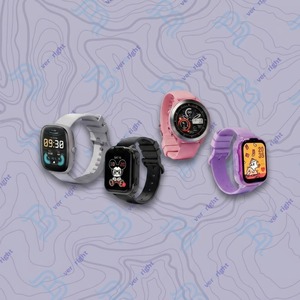
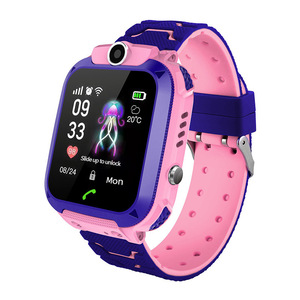
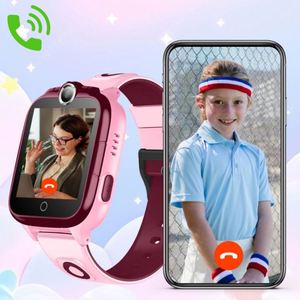
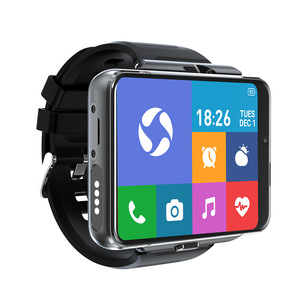
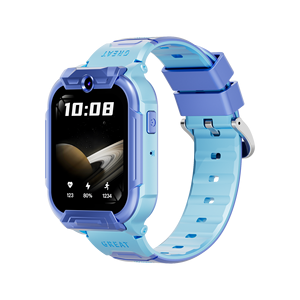
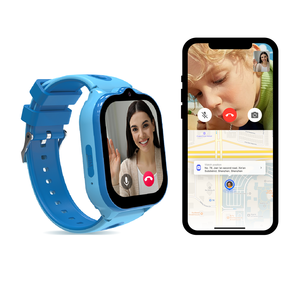
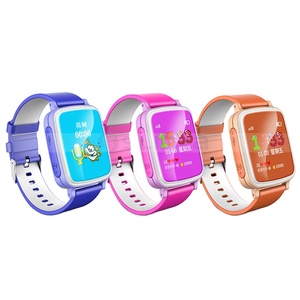
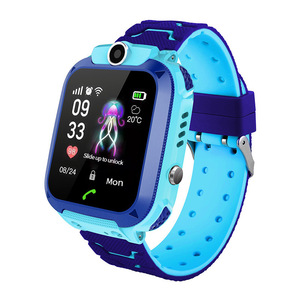
The global wearable technology market for children and preteens (ages 6 to 12) has reached a critical inflection point. As parents increasingly seek to delay traditional smartphone ownership due to concerns regarding social media addiction, screen time toxicity, and unmonitored internet exposure, the standalone 4G preteen smartwatch has emerged as the definitive communication bridge.
For B2B procurement managers, consumer electronics brand owners, and telecom distributors, sourcing from the right preteen smartwatch factory requires evaluating metrics far beyond basic unit costs. Unlike adult fitness trackers or generic consumer smartwatches, preteen wearables operate under stringent international regulatory frameworks including COPPA (Children's Online Privacy Protection Act) in the United States, GDPR (General Data Protection Regulation) in the European Union, and strict RF SAR (Specific Absorption Rate) health limits globally.
Core Procurement Insight: Sourcing preteen smartwatches demands a dual-audit approach—evaluating both hardware engineering prowess (cellular RF tuning, IP68 water ingress protection, battery management protection ICs) and software infrastructure (encrypted cloud servers, white-label parent mobile apps, zero third-party data tracking).
Preteens represent a distinct user cohort: they require more advanced features than early childhood wearables (such as HD video calls, step goal gamification, and custom watch faces), yet their devices must remain strictly sandboxed from open internet browsers, app stores, and public social feeds. Leading manufacturers now specialize in custom RTOS (Real-Time Operating System) and lightweight Android OS forks optimized for low power consumption, enhanced memory efficiency, and total parental control integration via dedicated Guardian iOS and Android mobile applications.
To assist strategic sourcing buyers in selecting tier-1 manufacturing partners, our engineering audit team has established the following technical standard matrix for preteen cellular wearables:
| Evaluation Module | Tier-1 OEM/ODM Standard Specification | Tier-2 Sourcing Risk Factors | B2B Sourcing Value Impact |
|---|---|---|---|
| Processor & Cellular Modem | Unisoc 8521E / W307 / Qualcomm Wear 4100 series (Global 4G FDD-LTE & VoLTE) | Legacy 2G/3G modules facing global network sunsets | Guarantees carrier compatibility across North America, Europe, & APAC |
| Location Architecture | Multi-constellation GPS + GLONASS + Wi-Fi positioning + LBS cell tower triangulation | LBS-only positioning with position drift errors up to 2 kilometers | Delivers pinpoint geofencing safe-zone accuracy within 5-15 meters |
| Water Protection | Vacuum-sealed acoustic membranes achieving verified IP67 or IP68 immersion standards | Unverified glue sealing susceptible to water damage during handwashing | Dramatically reduces RMA return rates driven by liquid damage |
| Battery Safety & IC | Pure cobalt lithium-ion polymer batteries with dual Seiko protection IC chips | Recycled lithium cells lacking thermal cutoff circuit boards | Ensures child thermal safety and zero risk of battery swelling or overheating |
| Parental Control SDK | AES-256 encrypted server communication with customizable white-label iOS/Android app | Public server infrastructure hosted without data isolation compliance | Protects brand reputation against security breaches and regulatory fines |
Stay ahead of consumer demand by understanding the next wave of technological innovations driving the global preteen wearable industry.
Physical SIM trays are rapidly being replaced by integrated eSIM chipsets, allowing importers and telecom operators to push over-the-air cellular provisioning. Furthermore, 5G RedCap (Reduced Capability) silicon will provide ultra-efficient 5G network compatibility with reduced battery drain.
Modern preteen smartwatches are shifting toward non-intrusive activity tracking. Advanced step counting, physical movement goals, and reward platforms (like step-to-gift converters) encourage active lifestyles without introducing screen addiction.
With increasing scrutiny over data protection, top factories are embedding secure hardware elements (eSE) directly into PCB designs. Audio recordings, location histories, and camera snapshots are end-to-end encrypted before transmission.
Building reliable, durable, and appealing smartwatches for preteens requires an integrated manufacturing footprint. Our featured manufacturing partners operate state-of-the-art facilities engineered specifically for micro-electronics assembly and child-grade safety certification.
Equipped with high-speed Yamaha and Fuji SMT placement lines capable of handling 0201 micro-components, operating within Class 10,000 dust-free cleanrooms for optical lens alignment and screen lamination.
All silicone straps, wristbands, and plastic housings are constructed using food-grade, hypoallergenic, and non-toxic TPU/silicone materials compliant with REACH, RoHS, and California Proposition 65 standards.
Every smartwatch casing undergoes 100% positive and negative pressure vacuum testing prior to battery assembly to guarantee IP67/IP68 waterproof sealing against swimming, rain, and immersion.
Find authoritative answers to common engineering, regulatory, and supply chain questions encountered by B2B buyers when importing preteen smartwatches.
No. Standard preteen smartwatches manufactured by leading OEM factories are standalone cellular devices equipped with built-in Nano-SIM card slots or eSIM modules. They communicate directly with cellular network towers for 4G voice calls, HD video calls, and GPS data transmission. Parents manage settings, approve contacts, and view locations remotely via a dedicated Guardian parental application installed on their own iOS or Android smartphone.
Top-tier factories integrate multi-modal positioning engines combining multi-channel GPS receivers, Wi-Fi MAC address scanning, and LBS cell tower identification. The smartwatch periodically uploads encrypted coordinate data to the cloud server. Parents can configure virtual safe boundaries (such as a 500-meter radius around a school or home). If the child enters or leaves this zone, automated push notifications are instantly dispatched to the parent's app.
School Mode is a specialized firmware protocol customizable via the parental control app. During scheduled classroom hours, the smartwatch locks out all interactive features, screen animations, and game-based applications—transforming the device into a silent time-only watch. Crucially, background SOS emergency button functionality and GPS tracking remain active, ensuring safety without introducing classroom distractions.
Standard ready-to-ship neutral packaging inventory typically has a low MOQ starting at 50 to 100 units. For custom logo laser engraving, custom silk-screen branding, and branded gift box packaging, the MOQ is generally 1,000 units. Deep OEM customization—such as custom color injection molding, bespoke boot animation, pre-installed regional carrier APN profiles, and custom APK app development—typically requires 2,000 to 5,000 units.
Compliant smartwatches isolate child data through end-to-end AES-256 encryption. Cloud servers are regionalized (e.g., AWS servers in Frankfurt for EU customers, AWS servers in Virginia for US customers). Devices strictly block unauthorized incoming phone calls or text messages from unapproved numbers. Furthermore, no personal identifying information of the child is stored unencrypted on the hardware or cloud databases.
For North American markets (AT&T, T-Mobile networks), devices require 4G FDD-LTE Bands 2, 4, 5, 12, 66, and 71. For European and Asian markets, hardware must support Bands 1, 3, 7, 8, 20, and TDD-LTE Band 38/40. Leading suppliers offer modular PCBA designs configured with region-specific RF power amplifiers and antenna tuners.
Accelerate your brand's growth with industry-leading 4G smartwatch manufacturing. Access custom tooling, turnkey parental app software, and certified IP68 water-resistant hardware.