Direct OEM/ODM Supply Chain Solutions Engineered for Global Telecommunications & Wholesale Brands
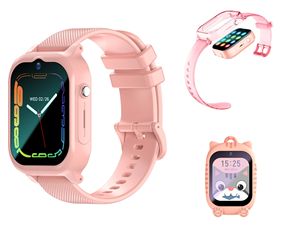
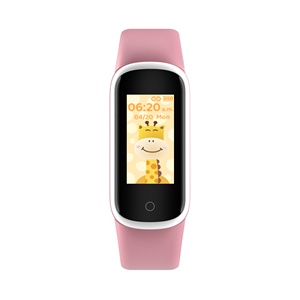
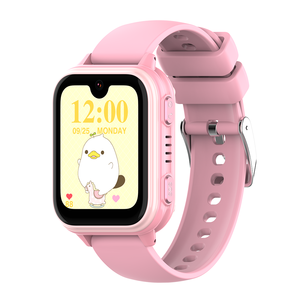
The global demand for standalone connected wearables for children aged 4 to 12 has experienced a monumental paradigm shift. As parents globally seek to defer the introduction of open-ended smartphones, the cellular-enabled kids phone watch has emerged as the definitive hardware category bridge. China, specifically the Shenzhen-Dongguan hardware technology corridor, accounts for over 85% of global kids smartwatch research, development, and high-precision Surface Mount Technology (SMT) production.
Navigating this complex manufacturing matrix requires global B2B procurement managers, telecom MVNO carriers, and consumer electronic brand directors to understand the nuanced technical, regulatory, and architectural criteria that differentiate tier-1 original equipment manufacturers (OEM) from commercial trading intermediaries. Premium manufacturing encompasses far more than plastic casing mold injection; it demands advanced Laser Direct Structuring (LDS) antenna engineering, ultra-low-power baseband processing (such as Unisoc 8521E or ASR chipsets), and multi-constellation GNSS positioning algorithms tuned for dense urban environments.
When procuring kids phone watches at scale, enterprise buyers must evaluate suppliers across four non-negotiable architectural dimensions:
Synergistic integration of L1+L5 GPS, GLONASS, Wi-Fi 6 indoor MAC sniffing, and LBS cell tower triangulation for sub-5 meter location precision.
Strict hardware security chips with AES-256 encryption, fully compliant with US COPPA laws and European Union GDPR data storage requirements.
Built-in nano-SIM or eSIM architecture supporting global 4G FDD-LTE and TDD-LTE frequency bands for crystal-clear two-way voice and video calling.
As the international hardware landscape matures, enterprise buying behaviors are evolving from cost-per-unit procurement to lifecycle value and software ecosystem integration. Brands sourcing from China must align their 3-to-5 year product roadmaps with several macro-technological trends:
Traditional physical nano-SIM card slots introduce structural vulnerabilities, compromising IP68 water-resistance integrity and increasing assembly complexity. Next-generation OEM manufacturing in China is aggressively transitioning to soldered eSIM (MFF2) solutions. This allows telecommunication operators to provision cellular profiles over-the-air (OTA) dynamically, reducing hardware SKU fragmentation across North America, Europe, and Asia-Pacific markets.
Basic GPS tracking is no longer a key differentiator for premium retail markets. B2B buyers are demanding onboard edge AI processing. Integrated neural processing blocks within modern smartwatch chipsets allow the device to learn a child’s daily commute routing (e.g., home to school). The system automatically triggers parent app notifications upon detecting anomalous spatial route deviations or unexpected speed changes, without relying on power-hungry continuous server pings.
Regulatory scrutiny around pediatric skin-contact consumer electronics has reached an all-time high. European EN 71 safety compliance, REACH regulations, and FDA-approved food-grade silicone wristbands are now baseline buyer requirements. Top-tier China manufacturers are utilizing dual-shot TPU/PC injection molding to create shock-absorbent chasses capable of surviving 1.5-meter drop tests onto solid concrete while maintaining IP68 continuous submersion rating (up to 1.5 meters for 30 minutes).
Hardware without secure, intuitive companion software presents a massive churn risk. Strategic suppliers in China now offer turnkey Android/iOS SDK packages and cloud platform API hooks (compatible with AWS, Azure, and Google Cloud). This enables brands to launch custom-branded parent controller applications (incorporating real-time tracking, remote camera snapshots, contact white-listing, and automated School Mode schedules) within 6 to 8 weeks.
To deliver competitive Information Gain for technical buyers, it is essential to analyze the exact component-level innovations occurring on China’s manufacturing factory floors today.
Historical issues with kids phone watches focused primarily on battery longevity and thermal dissipation. Older 3G and early 4G chips generated excessive heat during video calls and drained standard 400mAh batteries in under 8 hours. Modern OEM designs leverage specialized low-power IoT SoCs (such as the Unisoc W307 or ASR3603 series), manufactured on 12nm/22nm process nodes. Combined with adaptive RF power scaling based on cell tower proximity, contemporary kids watches achieve 48 to 72 hours of active standby time on high-density silicon-anode battery cells.
Engineering two-way audio performance inside an IP68 sealed watch casing requires advanced acoustic chamber design. Leading manufacturers employ ePTFE (expanded polytetrafluoroethylene) hydrophobic acoustic vents. These micro-porous membranes allow sound waves to pass freely while blocking water molecules at pressures exceeding 50 kPa. Coupled with dual MEMS noise-canceling microphones, children can conduct voice calls clearly even in noisy playground environments.
Sunlight legibility and impact resistance are paramount for child safety wearables. Transitioning from legacy TFT TN displays to full-lamination IPS panels featuring One Glass Solution (OGS) technology eliminates the air gap between the touch sensor and LCD panel. This drastically improves outdoor visibility under direct sunlight, reduces display module thickness by 20%, and enhances touch responsiveness for small hands.
Building a successful global kids smartwatch brand requires a manufacturing partner with deep vertical integration, established supply chain networks, and rigorous quality control protocols. Our manufacturing facilities combine cutting-edge hardware design with complete product lifecycle oversight:
High-speed Siemens SMT assembly lines capable of mounting 0201 micro-components with 99.98% placement accuracy.
Pre-tested and certified for FCC, CE-RED, RoHS, REACH, SAR (Specific Absorption Rate), and UN38.3 battery transport standards.
Over a decade of dedicated engineering, shipping tens of millions of devices to major global carriers and retail giants.
From initial ID/MD industrial design sketching and rapid 3D sample prototyping to mold tooling, PCBA layout, antenna tuning, and automated aging testing, our turnkey OEM/ODM operations ensure your brand enters the market fast, compliant, and at scale.
Below are authoritative responses to the most vital technical, commercial, and regulatory questions regarding kids phone watch procurement from China.
For standard white-label devices with customized packaging and logo silk-screening, our typical MOQ starts at 1,000 units per model. For complete custom ODM projects involving custom plastic injection molds, dedicated PCBA board layouts, and bespoke firmware builds, the standard baseline MOQ is 3,000 to 5,000 units depending on component availability.
Data privacy is engineered directly into our cloud backend and firmware architecture. We utilize end-to-end AES-256 bit data encryption for all data packets transmitted between the watch and servers. Furthermore, we deploy isolated regional AWS/Azure cloud server infrastructure located natively within North America and Western Europe, ensuring children's location data and voice messages never leave their respective legal jurisdictions.
Yes. Cellular frequency bands vary significantly by region. For North America (AT&T, T-Mobile networks), watches require FDD-LTE Bands B2, B4, B5, B12, B66, and B71. For Europe and Asia, Bands B1, B3, B7, B8, and B20 are standard. We provide pre-configured baseband firmware for specific target markets to guarantee seamless carrier activation and compliance.
School Mode is a parent-controlled feature scheduled via the companion smartphone application. When activated during school hours, the watch disables all interactive entertainment, games, and incoming non-emergency calls, transforming the device into a simple time-telling instrument. Crucially, background GPS tracking and the physical SOS one-touch panic button remain fully operational for safety emergency situations.
Pediatric safety requires strict RF radiation limits. Our devices are engineered with optimized LDS antennas located at the top of the watch casing (away from the wrist bone). Devices undergo rigorous testing in accredited laboratory chambers to ensure SAR levels stay well below the strict US FCC limit (1.6 W/kg over 1g of tissue) and EU CE standard (2.0 W/kg over 10g of tissue).
Every single IP68-rated watch chassis undergoes 100% automated pneumatic pressure leak testing on the assembly line prior to final electronic installation. Random batch samples are subsequently subjected to thermal shock immersion testing and continuous 1.5-meter water submersion tank testing for 30 minutes to guarantee zero ingress failure in consumer hands.
Yes. We provide complete app solutions ranging from fully customized UI white-labeling of our existing parental app (including your brand colors, logo, and app store listings) to offering full RESTful API documentation and SDKs for enterprise brands wishing to integrate smartwatch telemetry into their existing family ecosystem apps.
For standard custom OEM orders using existing tooling, sample approval takes 7 to 10 days, followed by mass production in 25 to 35 days. For full ODM customization requiring new mold design, tooling, and regulatory certification, total project lead times range from 60 to 90 days depending on component sourcing lead times.
Ready to launch your brand's next-generation connected safety wearable? Speak directly with our senior hardware engineers and global supply chain directors today for custom quotations, engineering samples, and compliance documentation.
Send an Inquiry