Direct from China's leading hardware manufacturing hub: Rigorously certified, multi-network cellular positioning devices designed for kids, seniors, and industrial personnel.
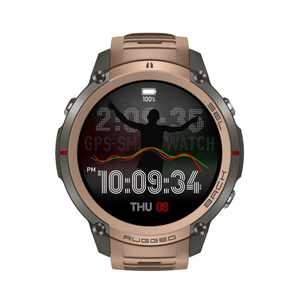
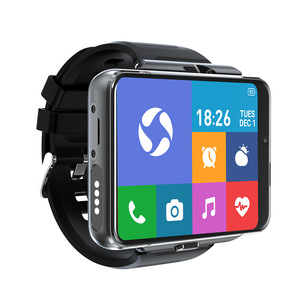
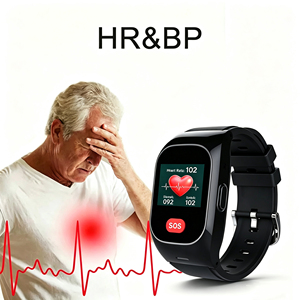

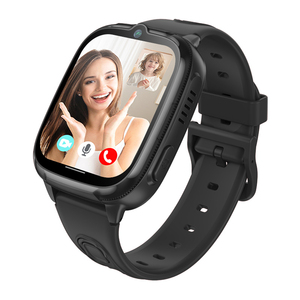
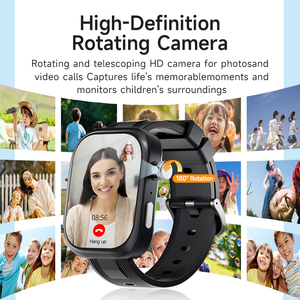
Understanding the engineering fundamentals behind Location-Based Service (LBS) tracker watches is critical for B2B procurement, fleet management integration, and white-label consumer offerings.
Location-Based Service (LBS) positioning technology relies on cellular tower identification (Cell-ID) and Received Signal Strength Indicators (RSSI) to calculate a wearable device's position. Unlike Global Navigation Satellite Systems (GNSS/GPS), which require line-of-sight exposure to satellites, LBS tracking functions seamlessly within indoor urban canyons, subterranean shopping centers, transit tunnels, and reinforced concrete school buildings.
For OEM/ODM importers, leveraging a hybrid positioning stack—incorporating LBS Cell Tower Triangulation, Wi-Fi MAC Address Sniffing, and Assisted-GPS (A-GPS)—yields an optimal balance between battery longevity, hardware BOM (Bill of Materials) cost, and real-time operational reliability.
| Positioning Metric | LBS (Cellular Triangulation) | GPS / GNSS Satellite | Wi-Fi MAC Address Sniffing |
|---|---|---|---|
| Indoor Penetration | Superior (Reaches basements & steel buildings) | Poor (Requires clear sky line-of-sight) | High (Dependent on local AP density) |
| Typical Accuracy | 50m – 500m (Cellular density dependent) | 2.5m – 10m (High precision) | 10m – 30m (Micro-location indoor) |
| Power Consumption | Ultra-Low (~5–10mA active telemetry) | High (~30–50mA active receiver load) | Moderate (~15–25mA per scan burst) |
| Cold Start Time (TTFF) | Instantaneous (< 1 Second) | 30s – 120s (Without A-GPS data) | 1s – 3s Scan Duration |
| Hardware BOM Impact | Zero Added Cost (Uses existing 4G modem) | Requires Dedicated GNSS Chip + Antenna | Requires Wi-Fi Scanning Transceiver |
Combining world-class R&D engineering in Shenzhen with ISO9001-certified high-throughput manufacturing lines to deliver uncompromised hardware reliability.
From schematic PCB layout design and industrial tooling design to custom firmware compilation and white-label mobile app integration (iOS & Android), we provide end-to-end manufacturing services tailored to your market specifications.
Our smartwatches are fully compliant with worldwide telecommunication and safety standards, holding authentic CE, RoHS, FCC, REACH, UN38.3 (Lithium Battery Safety), and MSDS certifications for seamless customs clearance.
We eliminate vendor lock-in. Our devices support porting to your proprietary cloud platform via MQTT, HTTP RESTful APIs, TCP/UDP raw sockets, or standardized protocols such as JT808 and Traccar backend engines.
Stay ahead of global telecommunication shifts and regulatory changes impacting hardware imports and wearable IoT deployment.
As telecom operators across North America, Europe, and Asia-Pacific complete the decommissioning of legacy 2G and 3G networks, enterprise buyers must pivot exclusively to 4G LTE Cat-1 Bis and 5G RedCap (Reduced Capability) modules. 4G Cat-1 Bis offers single-antenna cost savings while providing universal global band support for LBS data pinging and VoLTE voice communication without hardware redesigns.
Next-generation LBS tracker watches are shifting from passive location reporting to active predictive safety. Embedded micro-RTOS algorithms analyze accelerometer, PPG, and LBS spatial movement in real time—instantly detecting accidental falls, abnormal heart rates, or perimeter breaches directly on the device edge before triggering server notification alarms.
Regulatory scrutiny around children’s personal data (COPPA in the US, GDPR-K in the EU) requires localized data routing, end-to-end AES-256 telemetry encryption, and strict disablement of unauthorized third-party trackers. China’s premier exporters now provide pre-certified firmware architectures that prevent unauthorized telemetry scraping.
Insights into chipsets, display engineering, and battery chemistry defining modern wearable tracker production.
Leading Chinese manufacturers leverage highly integrated cellular SoCs from suppliers such as Unisoc (Spreadtrum), ASR Microelectronics, and MediaTek. By combining the baseband processor, RF transceiver, power management unit (PMU), and memory onto a single die, modern 4G LBS tracker watches consume up to 40% less board space, enabling battery capacities exceeding 700mAh to fit inside slim 14mm chassis profiles suitable for young children's wrists.
While consumer smartwatches lean heavily toward vibrant 1.43-inch AMOLED screens with high refresh rates, specialized enterprise trackers (e.g., student location badges or lone-worker watches) utilize Memory-in-Pixel (MIP) or toughened IPS LCD panels. These screens ensure crystal-clear outdoor legibility under direct sunlight while reducing backlight power draw to near zero during static operation.
Achieving IP68 waterproof ratings while maintaining two-way high-definition voice calling requires specialized hydrophobic acoustic membranes (such as Gore-Tex waterproof vents) positioned over the microphone and speaker cavities. Precision sonic welding of the watch enclosure combined with liquid silicone rubber (LSR) gasket sealing guarantees protection against prolonged immersion in water up to 1.5 meters.
Essential guidance for international distributors, brand owners, telecommunication operators, and OEM buyers.
An LBS (Location-Based Service) watch determines position by calculating signal strength and tower IDs from surrounding mobile networks. This allows it to report location indoors, inside dense concrete buildings, and underground where satellite signals cannot penetrate. GPS-only devices require direct sky exposure. Modern China-manufactured tracker watches use dynamic hybrid positioning (LBS + Wi-Fi + GPS) to automatically switch based on signal availability.
For standard stock models with custom logo silk-screening and customized packaging, our MOQ starts at 500 to 1,000 units. For full ODM hardware modifications (custom motherboard layout, custom mold tooling, or deep firmware/OS modifications), the typical MOQ is 3,000 to 5,000 units depending on component specifications.
Yes. We provide complete backend API documentation, socket server communication protocols (TCP/UDP), and MQTT payloads. Our software engineering team can port the watch's telemetry output directly to your server endpoint (such as AWS IoT Core, Azure IoT Hub, or private dedicated servers).
All battery cells utilized in our manufacturing facility undergo strict UN38.3, IEC62133, and MSDS testing to ensure air and sea freight safety compliance. The assembled smartwatches are tested in accredited third-party laboratories (such as SGS or TÜV) to obtain CE-RED, FCC ID, and RoHS compliance certificates for global importing.
School Mode is a parent- or administrator-controlled schedule setting pushed via the mobile application or central management server. During configured class hours, the smartwatch screen locks to display only time and emergency SOS functionality, disabling games, camera, and incoming non-emergency voice calls to eliminate classroom distractions.
We produce specific band configurations for global markets: European/Asian bands (B1/B3/B5/B7/B8/B20/B38/B40/B41) and North American bands (B2/B4/B5/B12/B13/B17/B66/B71). Multi-band global roaming versions are also available upon request.
Connect directly with our senior OEM engineering team to receive full hardware datasheets, SDK protocol documentation, and factory-direct volume pricing quotes.
Get Catalog