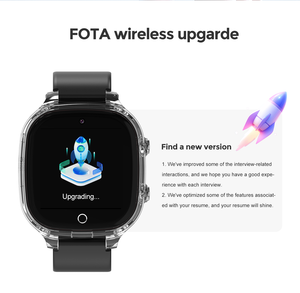
Certified 4G/eSIM cellular locator watches engineered for telecom operators, global brand importers, and wholesale distributors.
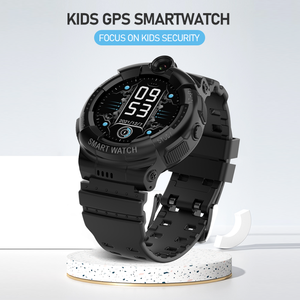
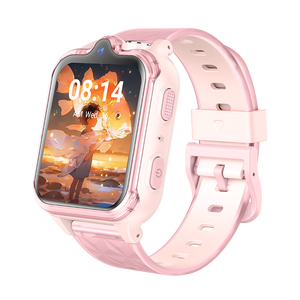
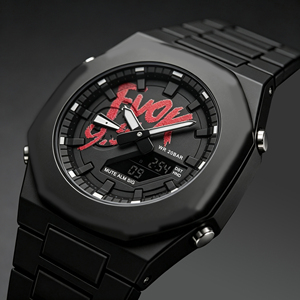
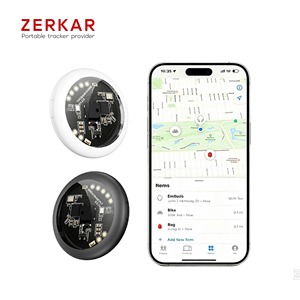
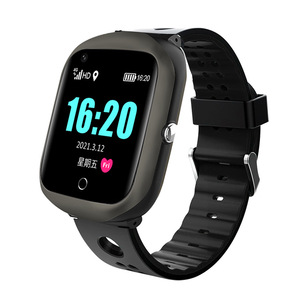
The global market for child safety wearables has evolved beyond elementary tracking accessories into highly sophisticated, carrier-approved cellular IoT endpoints. Modern enterprise buyers—including Tier-1 mobile network operators (MNOs), consumer electronics brands, and regional safety equipment distributors—must evaluate manufacturing partners based on underlying system architecture, RF engineering capability, and compliance with stringent data protection frameworks.
First-generation tracking devices suffered from severe signal degradation within urban canyons and reinforced concrete school buildings. Leading OEM manufacturing facilities have integrated hybrid location engines utilizing Qualcomm, MediaTek, and UNISOC cellular platform chipsets. By combining GNSS constellation tracking (GPS, GLONASS, BeiDou, Galileo) with localized Wi-Fi RSSI fingerprinting and LBS cell-tower triangulation, modern devices achieve sub-5-meter indoor and outdoor location accuracy.
As 2G and 3G networks undergo global decommissioning, manufacturing lines have entirely shifted toward 4G LTE Cat-1 and Cat-M1 architectures. The integration of MFF2 (eSIM) chips soldered directly onto the main PCBA eliminates traditional SIM card trays. This transition achieves two critical engineering objectives: it dramatically enhances structural IP68 ingress protection by removing physical openings and allows remote over-the-air (OTA) provisioning for multi-country telecom distribution.
Child safety devices operate under severe spatial constraints. Thermal dynamics and wrist ergonomics limit physical battery volume. Leading ODM exporters now utilize high-density pure cobalt lithium-polymer batteries paired with dynamic power management ICs (PMICs). By implementing deep-sleep telemetry intervals and adaptive screen dimming algorithms, 700mAh battery capacities now comfortably deliver up to 72 hours of operational standby and 6 hours of continuous VoLTE video calling.
The integration of optical photoplethysmography (PPG) sensors and NTC temperature thermistors enables real-time physiological monitoring without compromising child privacy. Embedded edge algorithms filter motion artifacts caused by active outdoor play, allowing accurate optical heart rate measurement, pulse oximetry (SpO2), and skin temperature tracking. In emergency scenarios, sudden drops or spikes in vital signs automatically escalate priority alerts to designated guardian contacts.
Laser Direct Structuring integrates 4G RF antennas directly into the watch casing, maximizing SAR safety compliance while enhancing signal gain in low-coverage zones.
Hermetically sealed enclosures crafted via high-frequency sonic welding allow continuous immersion in up to 1.5 meters of water for 30 minutes.
End-to-end AES-256 encrypted socket communication protocols linking watch firmware to parent mobile applications hosted on ISO 27001 servers.
As consumer expectations for child safety hardware escalate, enterprise purchasing directors must align their supply chain strategies with shifting international regulatory environments, hardware customization demands, and platform interoperability standards.
| Procurement Metric | Legacy Sourcing Model (2018-2022) | Next-Gen OEM Sourcing Paradigm (2025-2030) |
|---|---|---|
| Cellular Band Support | Regional Fixed Bands (Single-market focus) | Universal Global 4G/5G Bands + Dynamic eSIM Carrier Switch |
| Waterproof Rating | IP65 / IP67 Rubber Gasket Seal | IP68 / 5ATM Ultrasonic Enclosure + Nano-coating PCBA |
| Application Software | Generic Turnkey White-Label Apps | Custom SDK/API Integration + Private AWS/Azure Cloud Deployment |
| SAR Safety Compliance | Basic CE/FCC Self-Declaration | Strict SAR (<1.6W/kg) Certification + EN 50360 Standard Compliance |
| Data Privacy Standards | Unencrypted HTTP Socket Data Transmission | TLS 1.3 / AES-256 Protocol + GDPR / COPPA / CCPA Audited Servers |
1. Modular Hardware Customization (ODM): Importers are increasingly prioritizing factories with in-house industrial design (ID), mechanical engineering (MD), and software engineering capabilities. Customizing housing molds, color swatches, packaging UX, and firmware boot animations enables brand differentiation in competitive retail markets.
2. Carrier Pre-Certification & PTCRB/GCF Approvals: Sourcing non-certified cellular devices leads to severe network rejection rates and customs impoundment. Top-tier exporters pre-test devices in specialized anechoic chambers to guarantee rapid PTCRB, GCF, FCC, and CE certification for seamless integration onto tier-1 carrier networks worldwide.
3. Sustainable & Bio-Compatible Materials: Regulatory bodies in Europe and North America have tightened restrictions on phthalates, nickel release, and hazardous plastics in children's products. Future sourcing contracts explicitly mandate food-grade silicone straps, bio-based polycarbonate casings, and RoHS/REACH material safety compliance reports.
Why international consumer brands, telecom carriers, and enterprise distributors partner with our specialized manufacturing lines.
State-of-the-art Siemens & FUJI Surface Mount Technology (SMT) lines capable of mounting 0201 micro-components with ±0.01mm optical precision for ultra-compact mainboards.
100% automated optical inspection (AOI), 5-day continuous thermal aging tests, mechanical drop testing (1.5m), and positive/negative pressure air-tightness testing.
Full OEM customization of the Guardian mobile app (iOS/Android), custom DNS routing, private MQTT server integration, and localized multi-language UI translation.
Pre-certified device portfolios carrying CE, FCC, RoHS, REACH, UN38.3 (battery transport safety), and MSDS documentation ready for immediate customs clearance.
Direct factory ownership of tooling workshops, plastic injection molding facilities, strap vulcanization lines, and final cleanroom assembly suites (ISO Class 7).
Assigned bilingual hardware and software engineers assisting your technical team from initial PRD review through engineering validation tests (EVT, DVT, PVT).
Essential technical and commercial insights for hardware purchasing managers, brand directors, and supply chain executives.
For neutral catalog items with stock housing, MOQs start as low as 100 to 500 units. For full OEM customization—including custom housing colors, silk-screened logos, customized gift boxes, and pre-installed brand firmware—the standard baseline MOQ is 1,000 units. Custom tooling for completely new ID mechanical molds requires an MOQ of 5,000 to 10,000 units.
Specific Absorption Rate (SAR) safety is a paramount design driver. Our engineers utilize Laser Direct Structuring (LDS) antennas positioned at the top edge of the watch housing, maxing out distance from the wrist bone. We utilize RF output power back-off algorithms that regulate transmission power during close-proximity calls. All devices pass strict EU CE (<2.0W/kg) and US FCC (<1.6W/kg) lab testing standards.
Yes. We offer complete server software deployment packages. Our engineering team provides source code licensing, API documentation, and Docker/Kubernetes deployment scripts to launch the backend infrastructure on your company’s private AWS, Google Cloud, or Microsoft Azure instance. This guarantees 100% compliance with local data sovereignty laws.
For standard OEM customization (existing tooling), sample preparation takes 3 to 7 business days, with mass production completing within 20 to 25 calendar days. For full ODM projects requiring custom industrial design and plastic injection tooling, structural design takes 15 days, mold fabrication takes 30 days, EVT/DVT testing takes 15 days, leading to mass production in approximately 75 to 90 days total.
Every single watch unit undergoes a dual-stage automated pressure test on the production line. First, the assembled housing undergoes negative vacuum pressure testing to identify micro-gasket flaws. Second, completed devices pass through a 100% positive air-pressure chamber test before packaging. Sample units from each batch undergo 24-hour saltwater submersion and thermal shock cycling.
Our firmware implements an automated Emergency Escalation Protocol. When a child presses the dedicated physical SOS button for 3 seconds, the device bypasses non-essential background processes to allocate maximum power to the 4G RF power amplifier. If primary VoLTE call setup fails due to weak coverage, the watch automatically cycles through pre-programmed emergency contacts while firing background SMS alerts containing raw GPS/LBS coordinates.
Connect directly with our engineering and procurement team. Get full hardware spec sheets, compliance certificates, wholesale price lists, and sample unit evaluation kits within 24 hours.