Turnkey, fully customizable 4G standalone wearables engineered specifically for children's safety, family connectivity, and Japanese carrier network standards.
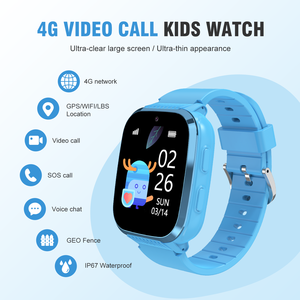
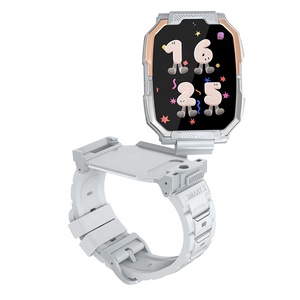
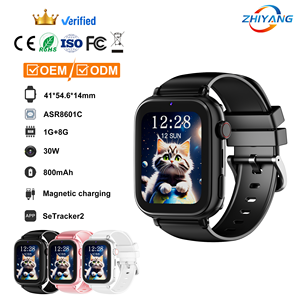
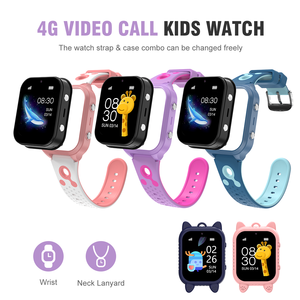
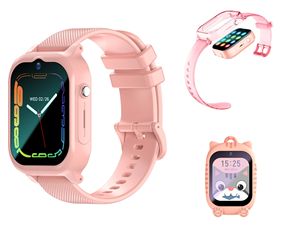
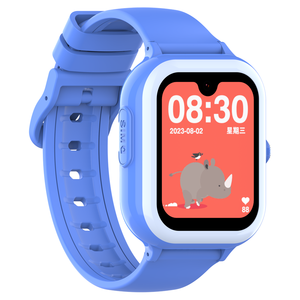
Why custom OEM standalone cellular smartwatches are replacing traditional trackers in Greater Tokyo's unique safety, schooling, and telecom infrastructure.
The Greater Tokyo Metropolitan area presents one of the world's most unique socio-technological landscapes for children's safety wearables. Unlike many Western urban centers where primary school students are escorted to school by parents via personal automobiles, Tokyo's elementary school children rely heavily on independent pedestrian commuting (*Tougakuro*) and public transit lines—including the extensive JR East, Tokyo Metro, and Toei Subway networks.
This localized independence is supported by a deeply embedded social framework known as "Mimamori" (地域社会の見守り - Community Watchfulness), where schools, local police boxes (*Koban*), and neighborhood associations actively monitor children's safe transit. However, dense high-rise structures, subterranean transit hubs like Shinjuku and Ikebukuro, and stringent school regulations regarding electronic distraction present rigorous technical challenges for standard consumer hardware.
As an established OEM/ODM standalone kids smartwatch manufacturer and exporter serving Tokyo brands, importers, and mobile virtual network operators (MVNOs), our factory delivers custom hardware tailored to overcome these urban hurdles. A true standalone smartwatch—operating independently of a paired smartphone via integrated eSIM/nano-SIM architecture—serves as the ideal communication bridge: offering real-time cellular voice calling, high-precision GNSS/Wi-Fi positioning, and single-touch SOS dispatch, all while completely isolating children from social media, open internet browsing, and screen addiction risks.
Ensuring seamless cellular performance on NTT Docomo, au (KDDI), SoftBank, and Rakuten Mobile networks alongside mandatory Japanese certification standards.
Deploying cellular wearables in Tokyo requires specific RF front-end module tuning to access Japanese "Platinum Bands" for superior wall-penetration and subterranean station access:
Exporting smartwatches to Japan mandates adherence to strict legal frameworks established by the Ministry of Internal Affairs and Communications (MIC) and METI:
How our OEM custom hardware functionality matches the day-to-day lifestyle and safety demands of Tokyo families and educational institutions.
Standard GPS often fails inside complex, multi-level transit terminals. Our custom firmware integrates Hybrid Multi-GNSS Positioning utilizing GPS, GLONASS, regional Japanese Michibiki (QZSS - Quasi-Zenith Satellite System), combined with local Wi-Fi MAC BSSID scanning and LBS cell-triangulation.
This allows parents using the Guardian smartphone app to pinpoint their child’s location within meters—even when navigating underground shopping avenues or elevated train platforms.
Elementary schools in Tokyo (such as those in Minato, Shibuya, and Setagaya wards) enforce strict bans on disruptive electronics. Our smartwatches feature remote-scheduled "School Mode" (Manner Mode) controlled via parental app.
During school hours, the touchscreen locks down into a simple analog watch face, silencing incoming calls, tones, and games, while keeping silent GPS tracking and background SOS emergency triggers continuously operational.
Japan’s vulnerability to natural disasters (earthquakes, torrential typhoon rain) requires robust emergency backup. Pressing the dedicated physical SOS button for 3 seconds instantly triggers an automated sequence:
It broadcasts real-time emergency coordinates to designated parent contacts, initiates an ambient voice monitoring audio channel, and transmits warning alerts over high-priority LTE cellular bands.
An authoritative technical evaluation comparing OEM standalone wearables against traditional smartphones and basic Bluetooth beacons.
| Evaluation Parameter | OEM Standalone 4G Smartwatch | Standard Consumer Smartphone | Basic Bluetooth / AirTag Tracker |
|---|---|---|---|
| Primary Target Demographic | Children Aged 4–11 Years | Teens & Adults | Item / Luggage Tracking |
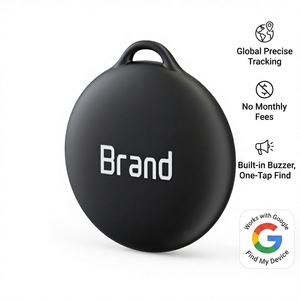
| Tokyo Network Compatibility | Direct LTE (Docomo/KDDI/SoftBank) | Full Cellular Carrier Data | No Direct Cellular (Crowdsourced BT) |
| Japanese School Compliance | 100% (Remote School Mode Lockout) | Prohibited in Most Primary Schools | Permitted (No Screen/Comm Interface) |
| Two-Way Voice / Video Calling | Parent-Whitelist Approved Contacts Only | Open Unrestricted Dialer & Apps | None |
| Location Precision (Indoor/Metro) | Multi-GNSS + QZSS (Michibiki) + Wi-Fi LBS | GPS + Cellular + Wi-Fi | Low (Relies on Nearby Paired Phones) |
| Hardware Durability & Ingress | IP67/IP68 Waterproof + Shockproof Frame | Fragile Glass Screen | Compact Plastic Shell |
| Cybersecurity & Internet Access | Closed OS: No Browser, No Social Media | Unrestricted Open Web Access | Encrypted Location Broadcast Only |
End-to-end OEM/ODM manufacturing excellence: from industrial tooling design and Japanese software localization to SMT assembly and quality assurance.
As a direct manufacturer, we offer comprehensive hardware customization options to help your brand stand out in the Japanese retail and B2B markets:
Hardware is only half the solution. Our internal software engineering team delivers fully localized software stack packages tailored for Japan:
Addressing key technical, regulatory, and supply chain questions for business partners sourcing standalone kids smartwatches.
For standard factory-ready models with custom logo silk-printing and branded packaging, our base MOQ starts at 500 units. For full OEM/ODM projects involving custom housing colors, tailored Japanese firmware modifications, and TELEC certificate co-licensing, our typical production baseline is 1,000 to 2,000 units depending on the hardware chipset specified.
Yes. Our cellular RF engines are engineered to support the major LTE bands utilized across Japan (B1/B3/B8/B18/B19/B26). Devices are compatible with standard nano-SIM and eSIM configurations from NTT Docomo, SoftBank, au (KDDI), as well as prominent local MVNO operators such as Y!mobile, UQ Mobile, and IIJmio.
We provide full turn-key regulatory support. Our engineering team conducts pre-compliance RF testing in our internal Anechoic Chamber prior to submitting devices to accredited Japanese MIC lab testing facilities. We provide all necessary schematic diagrams, PCB layouts, block diagrams, and operational descriptions required to secure official TELEC type authorization approval certificates for your brand.
Japan’s Michibiki satellite system is specifically designed to augment standard GPS positioning by orbiting at high elevation angles directly over East Asia. In dense urban canyons like Tokyo (where tall buildings obstruct low-horizon GPS signals), our QZSS-enabled positioning firmware receives zenith-level signals, reducing location error from ~15-30 meters down to sub-meter precision.
All smartwatch batteries feature pure high-density cobalt lithium polymer chemistry equipped with dual-IC protective circuit boards (SEIKO protection ICs) to prevent overcharging, over-discharging, and short-circuiting. Batteries undergo UN38.3, MSDS, and PSE safety testing to ensure long cycle life and thermal stability during daily continuous wear.
Partner with an industry-leading OEM manufacturer offering TELEC compliance, Japanese carrier tuning, and turnkey hardware/software ODM solutions.
Contact Us