Factory-direct OEM/ODM smart wearable devices engineered for LATAM cellular networks, school safety compliance, and rugged youth usability.
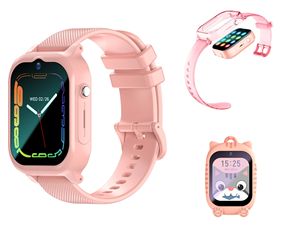
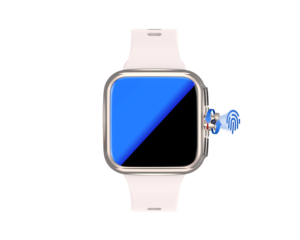
The consumer electronics ecosystem in Colombia is undergoing a structural paradigm shift in youth connectivity. As primary and secondary educational institutions across major metropolitan hubs—such as Bogotá D.C., Medellín, Cali, Barranquilla, and Bucaramanga—enforce increasingly stringent restrictions on smartphones inside classrooms, parents and school administrators are demanding specialized alternatives. The market requires a dedicated wearable solution that balances real-time parental oversight with zero classroom distraction.
Chinese original equipment manufacturers (OEMs) and original design manufacturers (ODMs) stand at the epicenter of this supply chain evolution. By combining advanced cellular baseband engineering with localized firmware, Chinese suppliers have pioneered 4G LTE standalone student smartwatches designed specifically for Latin American telecommunications infrastructure. For Colombian B2B importers, consumer brand owners, and telecommunications distributors, sourcing student smartwatches from top-tier Chinese manufacturers is no longer merely a low-cost procurement exercise—it is a strategic technological partnership that requires strict compliance with Colombia's regulatory body, the Comisión de Regulación de Comunicaciones (CRC), as well as carrier-level network optimization.
Unlike off-the-shelf consumer wearables, student smartwatches destined for Colombia must satisfy dual-frequency GPS requirements to overcome dense urban topographies (such as Bogotá's high-rise Andean valleys) while maintaining compatibility with local mobile network operators (MNOs) including Claro (América Móvil), Movistar (Telefónica), Tigo (Millicom), and WOM.
A persistent risk for Colombian electronics importers is purchasing cellular smartwatches that suffer from TAC (Type Allocation Code) blacklisting or band incompatibility. In Colombia, strict anti-theft legislation enforced by the CRC mandates that all cellular-enabled devices must possess verified, authentic TAC ranges registered with GSMA and compliant with local network frequencies.
To deliver seamless two-way HD voice calls, VoLTE (Voice over LTE), and uninterrupted GPS telemetry transmission, student smartwatches produced by Chinese exporters must integrate cellular modems (such as Unisoc W527, SL8541E, or ASR platforms) supporting the specific RF spectrum allocated in Colombia:
| Colombia Operator | Primary 4G Bands | CRC TAC Registration Required | VoLTE Smartwatch Compatibility |
|---|---|---|---|
| Claro Colombia | Band 4 (AWS), Band 7 (2600), Band 28 (700) | YES (Strict) | Supported (Unisoc / ASR Modems) |
| Movistar Colombia | Band 4 (AWS), Band 28 (700) | YES (Strict) | Supported |
| Tigo Colombia | Band 4 (AWS), Band 2 (1900), Band 28 (700) | YES (Strict) | Supported |
| WOM Colombia | Band 4 (AWS), Band 38 (2600 TDD) | YES (Strict) | Supported |
Designing student smartwatches for Colombia requires understanding the unique daily routines, security requirements, and educational environments of Colombian families.
In traffic-dense cities like Bogotá and Medellín, students rely on school buses (rutas escolares) or public transit (TransMilenio, Metro de Medellín). Chinese 4G smartwatches equipped with multi-constellation GPS + LBS + Wi-Fi positioning provide real-time geofencing alerts to parents' smartphones the moment a child enters or leaves school premises.
Colombian educational policies restrict mobile device usage to eliminate digital distraction during academic hours. Through remote parental Guardian Apps, parents activate scheduled "School Mode", converting the watch into a silent timekeeper where games and calls are locked out, leaving only the stealth One-Touch SOS button active.
Personal security is a primary purchasing driver for parents across Latin America. In urgent scenarios, holding the dedicated physical SOS key for 3 seconds initiates a continuous auto-dial sequence to pre-approved primary guardians while simultaneously pushing an emergency GPS location drop to the AWS-hosted cloud app.
Market intelligence indicates a robust compound annual growth rate (CAGR) of over 14.2% for smart youth wearables in the Andean region. Key structural dynamics driving this trend include:
Colombian parents are delaying smartphone acquisition for children until ages 13–14 due to growing concerns over social media addiction, cyberbullying, and uncurated internet access. Standalone smartwatches (such as the XGO3 and X6Play concepts) fulfill the essential communication gap—providing voice calls, text messaging, and location tracking—without exposing children to open web browsers or addictive gaming ecosystems.
B2B importers can no longer succeed with generic English-language smartwatches. Colombian consumers demand flawless Latin American Spanish translation across both the watch's operating system (Android-based or RTOS) and the companion parental iOS/Android application. Furthermore, server-side data security must comply with Colombia's Law 1581 of 2012 (Habeas Data), necessitating cloud server nodes situated on Amazon Web Services (AWS) or Microsoft Azure with minimal latency to South America.
Colombia's diverse geography—ranging from the humid Caribbean coastline of Cartagena and Barranquilla to rainy mountain zones—demands IP67 or IP68 waterproof ratings. Leading Chinese exporters utilize acoustic membrane waterproofing on speakers and microphones, reinforced TPU/silicone bands, and anti-shatter tempered glass display panels to withstand intense student play.
With close to a decade of specialized R&D in children's safety wearables, our manufacturing infrastructure delivers turnkey solutions for top Colombian brands, telecom partners, and retail chains.
High-speed Panasonic SMT lines producing mainboards equipped with shielded RF components, optimized power management ICs (PMICs), and thermal-dissipating PCB layouts.
100% factory RF testing for SAR (Specific Absorption Rate) compliance, CE, FCC, RoHS, and pre-cleared GSMA TAC allocations specifically formatted for CRC Colombia approval.
End-to-end OEM/ODM customization: custom boot screen animations, silk-screened brand logos, custom retail packaging in Spanish, and custom APK companion app builds.
Clear, definitive answers to help B2B buyers navigate procurement, regulatory compliance, logistics, and technical customization.
Reputable Chinese suppliers work closely with GSMA to issue legitimate, unique TAC ranges for cellular modems. To pass CRC (Comisión de Regulación de Comunicaciones) homologation, suppliers provide comprehensive SAR test reports, FCC/CE certificates, and official band test sheets proving support for LTE Bands 4 and 28. This prevents device blocking by Colombian operators like Claro or Movistar.
Yes. All OEM/ODM smartwatches exported to Latin America feature localized Spanish interfaces on both the watch display (touchscreen menu) and the parental Guardian companion app (available on Android and iOS). Custom translation adjustments can be configured during the firmware customization phase.
Standard neutral factory inventory carries low MOQs starting at 100 units. For custom logo silk-screening, customized Spanish retail packaging, and personalized boot-up screens, the typical MOQ is 1,000 units. Full ODM hardware mold customization or deep firmware revisions usually begin at 3,000 to 5,000 units.
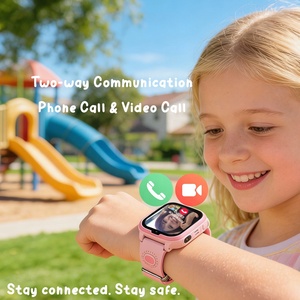
Our 4G student smartwatches operate as completely standalone mobile devices. Each watch contains a Nano-SIM card slot (or eSIM chip) and its own assigned telephone number. Children place voice/video calls directly from the wrist, while parents control all safety settings, contacts, and live tracking remotely via their own mobile phones.
Goods are typically shipped air freight (to El Dorado International Airport, Bogotá) for fast turnaround, or sea freight (to the Port of Buenaventura or Cartagena) for high-volume orders. Devices fall under HS Code 8517.62 (Telecommunications Transmission Apparatus). Importers must work with a licensed Agencia de Aduanas in Colombia to process DIAN import declarations and VAT (IVA) payments.
Parents can set time windows (e.g., Monday through Friday, 7:00 AM to 1:00 PM) inside the Guardian App. During these hours, the watch's display locks out games, calls, and chat features. The screen displays only the time, while background GPS positioning and emergency SOS triggers remain active silently.
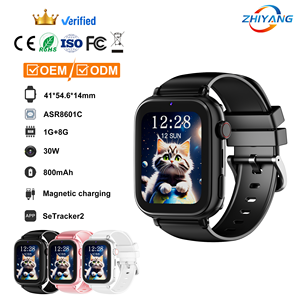
Our smartwatches utilize high-density Cobalt polymer batteries ranging from 680mAh to 1000mAh. Coupled with dynamic power-saving algorithms, the devices deliver 24 to 48 hours of active standby on a single charge. Charging is facilitated via magnetic pogo-pin connectors, preventing water ingress and port damage from continuous student handling.
Yes. Companion app backend infrastructure can be connected to AWS South America (São Paulo) or US East cloud clusters. This guarantees low latency for real-time map rendering across Colombian cities while ensuring compliance with international data privacy protocols regarding children's telemetry data.
Partner with an industry-leading OEM/ODM manufacturer in China. Get technical spec sheets, CRC homologation guidance, and factory-direct B2B wholesale quotations today.
Contact Us